

You may have noticed that we say very little about animal research in our text. That is strange because we both come from animal research backgrounds. Much has changed in animal research over the course of our careers. There is much less animal research going on in psychology than there was 40 years ago.
There are several reasons why animal research is less common now. The most obvious, perhaps, is the rise of the animal rights community, notably PETA (People for the Ethical Treatment of Animals and similar groups. I attended the 1990 APA convention where PETA exhibited a float outside of the Washington Hilton Hotel depicting the horrors of animal research. At that same meeting, demonstrators disrupted presentations, including one by Neil Miller at which I was in the audience.
Another reason for the decline of animal research in psychology is money and still another is more outside regulation. The price of animals has risen as has the price of housing and caring for them. In addition, new regulations (which we cover in chapter 3) have made it more difficult to maintain existing animal facilities and nearly impossible to start new ones.
Sally Boysen's chimpanzee research is an apt example. (See this link to Scientific American Frontiers for more information.) Her research, valuable as it was, ended up a victim to costs, regulations, and more. Her university closed down the lab and sent the animals to Texas. Boysen chained herself to the door of the lab before the move, but that action, dramatic as it was, changed nothing. Here is a news story about the closing of her lab.
The impetus for this post, however, is an upcoming book: The Animal Research War by P. Michael Conn and James V. Parker, to be published by Palgrave Macmillan in May 2008. Here is a link to the publisher's page about that book. Here is an link to an excerpt, you may have to register (for free) before being allowed to read it. If you are interested in animal research, I recommend the excerpt highly.
All things change, including psychology. Animal behavioral research is still valuable, I think. Certainly, the assault from PETA and others forced changes too. Some of those changes were probably needed. For instance, undergraduates taking physiological psychology courses probably don't need to sacrifice and dissect a rat's brain in order to learn how brains work. Obviously, graduate students in physiological psychology do need to learn such techniques. The winds of change blow and we usually don't know what kinds of changes they will bring. Less animal research in psychology was one of them however.
Thursday, April 3, 2008

Sunday, March 30, 2008
Participant Observation vs. Undercover Investigations
Whenever I teach about participant observation (chapter 10), I nearly always get a question about how participant observation research compares with police undercover investigations.
The first thing I say is that the goal of research is to collect empirical data for scientific purposes. Whereas the goal of an undercover investigation is to collect evidence of a crime. Thus, at the outset there is a big difference in the goals of each.
In participant observation, an IRB must first review the prospectus of the research and decide whether any ethical problems exist. If ethical problems exist, the IRB must provide some guidelines on how to handle them. I like to tell the story of Jim Quinn, a member of the Department of Rehabilitation, Social Work, and Addictions at North Texas State. For his PhD research, he joined the Bandidos motorcycle gang in Miami. That research was also reported in his article:
Quinn, J. F. (1987). Sex roles and hedonism among members of`outlaw' motorcycle clubs" Deviant Behavior, 8, 47-63.
He had to cut his research short because he became convinced that if he remained in the club he would become party to a crime. Ethically, a scientist cannot use the conduct of research as an excuse to participate or be party to criminal acts.
Let's now look at undercover investigations. Recall, the goal here is to find evidence of criminal activity and to, later, prosecute it. Ethics is a concern here too. What are the permissible activities that an undercover officer may participate in? Can the officer smoke a joint? Obviously, officers must lie in order to establish a relationship with a criminal. In sex crime cases, like prostitution, how far can an officer allow sexual contact? Can an officer threaten someone into committing a crime? Can an officer continually offer criminal temptation to a potential criminal? The ethical line seems fuzzier and broader to me here than in participant observation.
All of the questions above are not really part of a typical psychology research course. However, many of the activities that participant observers and undercover investigators take part in are similar. Just remember that their goals are quite different.
The first thing I say is that the goal of research is to collect empirical data for scientific purposes. Whereas the goal of an undercover investigation is to collect evidence of a crime. Thus, at the outset there is a big difference in the goals of each.
In participant observation, an IRB must first review the prospectus of the research and decide whether any ethical problems exist. If ethical problems exist, the IRB must provide some guidelines on how to handle them. I like to tell the story of Jim Quinn, a member of the Department of Rehabilitation, Social Work, and Addictions at North Texas State. For his PhD research, he joined the Bandidos motorcycle gang in Miami. That research was also reported in his article:
Quinn, J. F. (1987). Sex roles and hedonism among members of`outlaw' motorcycle clubs" Deviant Behavior, 8, 47-63.
He had to cut his research short because he became convinced that if he remained in the club he would become party to a crime. Ethically, a scientist cannot use the conduct of research as an excuse to participate or be party to criminal acts.
Let's now look at undercover investigations. Recall, the goal here is to find evidence of criminal activity and to, later, prosecute it. Ethics is a concern here too. What are the permissible activities that an undercover officer may participate in? Can the officer smoke a joint? Obviously, officers must lie in order to establish a relationship with a criminal. In sex crime cases, like prostitution, how far can an officer allow sexual contact? Can an officer threaten someone into committing a crime? Can an officer continually offer criminal temptation to a potential criminal? The ethical line seems fuzzier and broader to me here than in participant observation.
All of the questions above are not really part of a typical psychology research course. However, many of the activities that participant observers and undercover investigators take part in are similar. Just remember that their goals are quite different.
Friday, March 21, 2008
Earliest Memories? The phenonenon of childhood amnesia
Here's a research question that has long intrigued me, a person's oldest memory. My oldest memory is from about three years of age. We lived in Bogota, Colombia at the time. I remember looking out the window at the stairway landing at a distant Andean peak that, apparently, was only visible every now and then because of the weather.
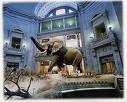
As a parent, I have informally tested my children from time to time about their memories. Once, I asked my oldest if he remembered visiting the Smithsonian's Natural History Museum a year after his last visit. He was about five years old at the time and he did not remember. I probed, and asked if he remembered what animal was just inside the main doors in the museum's rotunda. He still did not remember.
Here is what he did not remember, the giant elephant:
 When discussing memory in class, I often ask students to recall their oldest memories. Sometimes the answers are quite extreme. Some students claim to recall salient events before they turned two years of age, while others are at a loss to recall anything before age five.
With the above as introduction, I found Wang's recent article quite apropos. Its title is: Where Does Our Past Begin? A Sociocultural Perspective on the Phenomenon of Childhood Amnesia. Here is a link to it.
Wang summarizes the data on childhood amnesia. Looks at theoretical attempts to explain it and proposes that childhood amnesia may vary socioculturally.
As a parent, I have informally tested my children from time to time about their memories. Once, I asked my oldest if he remembered visiting the Smithsonian's Natural History Museum a year after his last visit. He was about five years old at the time and he did not remember. I probed, and asked if he remembered what animal was just inside the main doors in the museum's rotunda. He still did not remember.
Here is what he did not remember, the giant elephant:
 When discussing memory in class, I often ask students to recall their oldest memories. Sometimes the answers are quite extreme. Some students claim to recall salient events before they turned two years of age, while others are at a loss to recall anything before age five.
With the above as introduction, I found Wang's recent article quite apropos. Its title is: Where Does Our Past Begin? A Sociocultural Perspective on the Phenomenon of Childhood Amnesia. Here is a link to it.
Wang summarizes the data on childhood amnesia. Looks at theoretical attempts to explain it and proposes that childhood amnesia may vary socioculturally.
Thursday, March 6, 2008
The Arkansas Symposium for Psychology Students
The Arkansas Symposium for Psychology Students (ASPS) will hold its 24th annual meeting on April 18-19, 2008 at Arkansas State University and our own Chris Spatz will be the keynote speaker.
ASPS was founded in 1984 by Randy Smith and Ralph McKenna. The germ of their inspiration came while walking down Bourbon St. during the 1983 meeting of the Southwestern Psychological Association. The first meeting was held at Hendrix College in 1984 followed by a second meeting at Ouachita Baptist University the following year. See below for a list of the locations where ASPS has been held over the years.
That second meeting was where Chris and I first met. In fact, we roomed together. So, we have been working together for a long time now.
Here are the previous sites and keynote speakers of the Arkansas Symposium for Psychology Students:
McKenna and Smith envisioned a low-stress, collegial conference where students and faculty could come together and celebrate research in psychology. At ASPS, all papers are accepted and there are no competitions, all in the service of friendly gathering and a good time.
ASPS was founded in 1984 by Randy Smith and Ralph McKenna. The germ of their inspiration came while walking down Bourbon St. during the 1983 meeting of the Southwestern Psychological Association. The first meeting was held at Hendrix College in 1984 followed by a second meeting at Ouachita Baptist University the following year. See below for a list of the locations where ASPS has been held over the years.
That second meeting was where Chris and I first met. In fact, we roomed together. So, we have been working together for a long time now.
Here are the previous sites and keynote speakers of the Arkansas Symposium for Psychology Students:
1985 | Hendrix College | March 29-30 | |
| 1986 | Ouachita Baptist University | April 11-12 | Steve Davis |
| 1987 | Southern Arkansas University | April 3-4 | Arthur J. Riopelle |
| 1988 | Arkansas Tech University | April 8-9 | Richard Dana |
| 1989 | Arkansas State University | April 7-8 | E. John Capaldi, Michael Prince |
| 1990 | Henderson State University | April 6-7 | Nate Azrin |
| 1991 | University of Arkansas-Fayetteville | April 5-6 | Elizabeth Loftus |
| 1992 | Hendrix College | April 3-4 | Charles Brewer |
| 1993 | Ouachita Baptist University | April 2-3 | Mark Ware |
| 1994 | Southern Arkansas University | April 8-9 | Bill Hill |
| 1995 | University of Arkansas-Monticello | April 7-8 | Richard Miller |
| 1996 | Arkansas Tech University | April 12-13 | Craig Carson |
| 1997 | University of Central Arkansas | April 11-12 | Mark Ware |
| 1998 | University of Arkansas-Fayetteville | April 3-4 | Phillip Costanzo |
| 1999 | Harding University | April 16-17 | Dave Myers |
| 2000 | Arkansas State University | April 7-8 | Sarah Boysen |
| 2001 | Hendrix College | April 6-7 | Charles Brewer |
| 2002 | Ouachita Baptist University | April 12-13 | Ludy Benjamin |
| 2003 | Southern Arkansas University | April 4-5 | Elizabeth Yost Hammer |
| 2004 | University of Arkansas-Fayetteville | April 4-5 | Brett Pelham |
| 2005 | Arkansas Tech University | April 8-9 | Sharon Roberts |
| 2006 | University of Central Arkansas | April 7-8 | John Harsh |
| 2007 | University of Arkansas-Monticello | April 13-14 | no invited speaker |
| 2008 | Arkansas State University | April 19-19 | Chris Spatz |
McKenna and Smith envisioned a low-stress, collegial conference where students and faculty could come together and celebrate research in psychology. At ASPS, all papers are accepted and there are no competitions, all in the service of friendly gathering and a good time.
Monday, February 25, 2008
By JoVE, I think they've got it.
JoVE is the acronym for the new Journal of Visualized Experiments. This biological Web site displays research protocols using video, a kind of scientific YouTube.
Here is a blog entry about Moshe Pritsker, the CEO of JoVE. He discusses new deals to distribute the videos and how the cost to produce them has increased. At present, JoVE has about 200 videos. Pritsker wants to become a purveyor of biological methods videos.
JoVE is yet another example of how technology, research, and teaching interact. Video is a powerful medium. Combining video with the Web (a la YouTube) makes it possible to distribute video widely.
In chapter 12 (p. 386), we discuss another use of media as a communication medium, that is e-posters. We anticipate that many more useful applications of technology will appear over the next few years. Successful teachers and successful students will adapt to and use these new methods.
Now we need a Web site for visualizing psychological methods and protocols.
Here is a blog entry about Moshe Pritsker, the CEO of JoVE. He discusses new deals to distribute the videos and how the cost to produce them has increased. At present, JoVE has about 200 videos. Pritsker wants to become a purveyor of biological methods videos.
JoVE is yet another example of how technology, research, and teaching interact. Video is a powerful medium. Combining video with the Web (a la YouTube) makes it possible to distribute video widely.
In chapter 12 (p. 386), we discuss another use of media as a communication medium, that is e-posters. We anticipate that many more useful applications of technology will appear over the next few years. Successful teachers and successful students will adapt to and use these new methods.
Now we need a Web site for visualizing psychological methods and protocols.
Thursday, February 21, 2008
Ethics Course Topics
C. Neal Stewart and J. Lannett Edwards recently taught a graduate level ethics course, Research Ethics for the Life Sciences. See The Scientist for a longer account account and for more detail on their course. See this link for a copy of their syllabus.
I thought their list of topics was instructive:
Their recommendations for teaching such a course also bear attention:
I thought their list of topics was instructive:
- plagiarism
- authorship
- grantsmanship*
- peer review
- research misconduct
- image fraud
- whistle-blowing*
- conflicts of interest
- patenting*
- women in science* (as a special topic)
Their recommendations for teaching such a course also bear attention:
- Team teach
- Use case studies
- Use practical examples
- Keep it light
- Keep class size small
- Focus on ethics not morality
Wednesday, February 20, 2008
Nobel Advice from Baltimore
The Chronicle of Higher Education recently reported on David Baltimore's advice to the American Association for the Advancement of Science (AAAS).
He said that scientists should:
In our book, we promote the unity of teaching and research and believe in creating small but realistic environments for our students to learn in. Naturally, we demand excellence too and believe in the importance of academic freedom. Concentrating resources has never been a problem for us, we have so little to start with.
He said that scientists should:
- Demand excellence
- Concentrate resources
- Create small environments
- Maintain the unity of teaching and research
- Make academic freedom crucial
In our book, we promote the unity of teaching and research and believe in creating small but realistic environments for our students to learn in. Naturally, we demand excellence too and believe in the importance of academic freedom. Concentrating resources has never been a problem for us, we have so little to start with.
Subscribe to:
Posts (Atom)