
Cats slowly domesticated themselves starting about 10,000 years ago. Unlike other domesticated animals who mostly live in herds and eat plants, cats are solitary and eat meat (Driscoll, Clutton-Brock, Kichener, & O’Brien, 2009). They found that “domestic cats arose in a single locale, the Middle East” (p. 71). On Cyprus, an island in the eastern Mediterranean, archeologists discovered the body of an eight-month-old cat intentionally buried near a person. The two burials were dated as being9,500 years old (Vigne, Guilaine, Debue, & Gerard, 2004). Unlike dogs, cats more closely resemble their wild ancestors, can survive without human help, and resist human efforts to limit their breeding opportunities. Left alone, cats tend not to wander far from where they were born. Cats, Lloyd (1986) suggests, migrate slowly “less than one mile per generation” (p. 51). Despite their tendency to not move much on their own, cats are found everywhere around the world either because their owners took them with them as they moved from place toplace or because the cats stowed away on ships. Thus, the study of cat genetics, interesting for its own sake, also reveals much about the migration of humans over the last 10,000 years from the earliest civilizations in western Asia (see chapter 2) to the rest of Europe and East Asia, and eventually, to the entire world.
The genetic key opening the rest of this story began when Searle (1947) first observed and calculated gene frequencies for wild type and mutant cat coat colors and patterns (e.g., wild or tabby, nonagouti or black, blotched tabby, sex linked orange, and others) in London. Since then hundreds of similar surveys have been conducted around the world and have been used to infer the historical patterns of human migration. In Europe, the pattern of nonagoutimutation, as measured by gene frequency analysis, may point to early human dispersals from Phoenicia and Greece to North Africa (Todd, 1997). Later migrations can also be interpreted through cat genetics. New York’s cats, even now, are more genetically similar to the cats of Amsterdam than to the cats of Boston, reflecting the movement of people and their cats from Holland to North America starting in 1626 (Lloyd, 1986).
Driscoll, C. A., Clutton-Brock, J., Kichener, A. C., & O’Brien, S. J. (2009). The taming of the cat, Scientific American, 300(6), 68-75.
Lloyd, A. T. (1986). Pussy cat, pussy cat, where have you been?, Natural History, 95(7), 46-52.
Searle, A. G. (1947). Gene frequencies in London’s cats, Journal of Genetics, 49, 214-220.
Todd, N. B. (1977). Cats and commerce, Scientific American, 237(5), 100-107.
Vigne, J. D., Guilaine, J., Debue, K., & Gérard, P. (2004). Early taming of the cat in Cyprus, Science, 304, 259.
Showing posts with label Chapter 11. Show all posts
Showing posts with label Chapter 11. Show all posts
Sunday, June 24, 2012

Saturday, June 11, 2011
Marx & Hillix (1963)
Needed to write about Clark Hull recently. Naturally, most new history texts or learning text only provide cursory information about him now.
I remembered that somewhere in my office I had a copy of Marx and Hillix's old History and Systems text. Its coverage of Hull was more detailed and proved most useful to me. Being an academic pack rat (e.g., keeping that old book) once again was a good thing for me. Never throw anything away. That's my message.
I remembered that somewhere in my office I had a copy of Marx and Hillix's old History and Systems text. Its coverage of Hull was more detailed and proved most useful to me. Being an academic pack rat (e.g., keeping that old book) once again was a good thing for me. Never throw anything away. That's my message.
Monday, December 14, 2009
My Office

Here is where I work. Here's a tour from left to right. On the left is one of my servers. It serves my research methods ideas database (private, sorry) and sometimes others (e.g., for candidates for our job searches). Next is my window air conditioner, possibly the most important piece of equipment of all, given our hot summers along with the fact that the building is not cooled from Thursday night until Sunday mornings in the summer. The gooseneck lamp, too, is vital as my eyes get older. The small television is connected to the local cable system and comes in handy when I am doing mechanical work such as grading tests from a key. It stays off when I'm trying to write. It's on top of an old 13" RGB monitor (just in case I ever get another Apple II+) and it's on top of a large speaker. The huge 24" screen belongs to my three-year old, ailing, out-of-warranty iMac. It can no longer be trusted, alas. About once a week it decides to enter an endless loop featuring the spinning Mac pinwheel icon. Fortunately, restarting it seems to kick it out of its misery. There are two phones. The one nearest the foreground no longer has a working line connected to it. It used to be connected to our long gone modem server (remember those days?). That phone is gone now, freeing up some desk space. The scanner between the phones only scans slides now; it's main scanner bulb is weak, plus it costs more to buy the bulb than to buy a new scanner. The stereo works and the wire hanging down from the ceiling is its FM antenna. It's in the only orientation that will receive a good signal. Under the scanner is a 12 port router connecting all of the computers to the Internet and to the local printers. Barely visible on top of the router is my next to last cell phone. It only serves to forward my calls to its number to my new phone. Last on the right is one of the world's fastest System 9 laptops. It was built as aG4 OS X machine but its hard drive died. At about the same time one of our G3 laptop's boards crashed. You can guess the rest, the G4 now holds the G3's old drive, presto. I use that laptop for my old HyperCard materials and for Mac WordPerfect files. So, believe it or not, nearly everything here has a purpose. The office chair is mine. We bought it at an auction long ago. It's more comfortable than it looks. Good thing, I spend lots of time on it. The drawings on the wall are mostly my daughter's work. The stuff behind the iMac is mostly notes to myself along with some wistful thinking about motorcycles. Fortunately I don't really want another one but I will take a two-seater sports car.
Wednesday, November 11, 2009
Mascots and Autism
Here is a report on a pilot project in Nebraska where autistic volunteers are dressing up in Frito-Lay inflatable costumes of Chester Cheetah. Keith Allen of University of Nebraska Medical Center and Scott Bowen of Signs and Shapes, a company that creates and produces inflatable costumes, are the collaborators.
The hope is that wearing the costume will allow the autistic volunteers to adopt a new identity while wearing the costume.
This is certainly a far out research idea. Hopefully it will work.

The hope is that wearing the costume will allow the autistic volunteers to adopt a new identity while wearing the costume.
This is certainly a far out research idea. Hopefully it will work.
Tuesday, August 11, 2009
Redheads and Pain
A recent article in the New York Times discusses the relationship between pain and having red hair. The problem is especially acute in dentistry. Redheads tend to avoid visiting the dentist because the usual does of analgesics (painkillers) are not effective.
The apparent cause seems to be the MC1R gene. In most people, that gene creates melanin. In redheads, however, the gene produces pheomelanin instead, causing red hair and fair skin. Another effect of pheomelanin is increased pain sensitivity, both for general and topical anesthesia.
Here's a research idea. Expose redheads and non-redheads to the cold pressor test, a standard laboratory test for pain using time as the dependent variable. Redheads, as a group, should remove their hands sooner.
Friday, July 31, 2009
Another Batch of Student Research Ideas: Summer 2009
Here are the latest research ideas from my Research Methods I students:
- Coach's Personality and Team Success
- Drug Abuse and College Students: Drugs of Choice
- Grade Inflation by College at Southern Arkansas University
- Prevalence of Date Rape Among SAU College Students
- Differences is Altruism Between Male and Female College Students
- Traditional vs. Non-traditional Undergraduate College Students: GPA Differences
- College Students from Divorced Homes Views on Marriage and Relationships
- Does Participation in Greek Life Affect Male and Female GPAs Differently?
- Does Regular Bible Reading Affect Pro-social Behaviors and Values?
- Are Male College Students Less Faithful than Female Students?
- Violent Criminal Family Histories: Effects of Parents Marital Status
- Is Recidivism More Likely with Mild or Harsh Punishment?
Wednesday, July 1, 2009
Texting and Length of Relationship
Modern love and romance seem inextricably linked to communication. But, I wonder is there too much of a good thing. Specifically, does texting predict relationship success?
I'm betting there's an inverse relationship, the more lovers text, the shorter their relationship will last.
A search of PsycINFO for "texting" found 24 hits, none closely related to relationship length. A couple did relate to a sexual topic, the use of texting to convey information about sexuality and risks of sex.
Someone, please test my hypothesis...
I'm betting there's an inverse relationship, the more lovers text, the shorter their relationship will last.
A search of PsycINFO for "texting" found 24 hits, none closely related to relationship length. A couple did relate to a sexual topic, the use of texting to convey information about sexuality and risks of sex.
Someone, please test my hypothesis...
Saturday, June 20, 2009
Jack Kramer Autograph Midsize Tennis Racquet
Back in the 1980s, I played a lot of tennis. In 1984, I logged nearly 200 matches. Those days are long gone. But a couple of days ago, I went to hit some tennis balls with my 16 year-old-son. As we were leaving the house (naturally) he informed me that he had broken the strings on his and his sister's racquet and that the only one he had left was my old Wilson graphite racquet, the one I used back then.
So, I went into our spare room to look for some more racquets. I knew my wife had one still from back then. What I did not remember was my old, wood, Jack Kramer Autograph midsize. Click HERE for a picture of one (not mine).
I picked it up. It was not warped but the grip tape was probably 20 years old. When we got to the courts, I cut off the old tape and wrapped on a new grip tape. I let him hit a few off the wall, unimpressed he was. No me, I was impressed. That old racquet felt brand new. Long story short, I played well, felt good, and even started getting my serve in once I quit trying to kill it.
What's the research idea? Obviously, it would be to get tennis players to hit their racquets for accuracy and then compare them to the Kramer. All the usual research caveats would apply of course: counterbalancing, a sufficient number of trials, and control for fatigue.
I'll probably play again soon, and when I do it will be with Jack.
So, I went into our spare room to look for some more racquets. I knew my wife had one still from back then. What I did not remember was my old, wood, Jack Kramer Autograph midsize. Click HERE for a picture of one (not mine).

I picked it up. It was not warped but the grip tape was probably 20 years old. When we got to the courts, I cut off the old tape and wrapped on a new grip tape. I let him hit a few off the wall, unimpressed he was. No me, I was impressed. That old racquet felt brand new. Long story short, I played well, felt good, and even started getting my serve in once I quit trying to kill it.
What's the research idea? Obviously, it would be to get tennis players to hit their racquets for accuracy and then compare them to the Kramer. All the usual research caveats would apply of course: counterbalancing, a sufficient number of trials, and control for fatigue.
I'll probably play again soon, and when I do it will be with Jack.
Friday, April 24, 2009
APA Publication Manual 6th Edition Out in July
In case you have not yet heard, the new Publication Manual of the American Psychological Association will be released in July.
One of the big changes from the 5th edition is coverage of issues related to computer technology:
1. Writing for the Behavioral and Social Sciences
One of the big changes from the 5th edition is coverage of issues related to computer technology:
- dealing with supplemental data
- referencing electronic sources
- a new APAstyle Web page
1. Writing for the Behavioral and Social Sciences
2. Manuscript Structure and Content
3. Writing Clearly and Concisely
4. The Mechanics of Style
5. Displaying Results
6. Crediting Sources
7. Reference Examples
8. The Publication Process
Appendices
Journal Article Reporting Standards (JARS)
Meta-Analysis Reporting Standards (MARS)
Flow of Participants Through Each Stage of an Experiment or Quasi-Experiment
References
Index
The new Publication Manual includes changes in:
Ethics
Simplified Heading Styles
Updated guidelines for reducing bias in language
New ways to report inferential statistics and revised table of statistical abbreviations
Ways to handle data sets and media
Displaying electronic data
Emphasis on DOI (Digital Object Identifier)
The Publication Process
Pre-order the Publication Manual HERE
Tuesday, April 7, 2009
Common APA Style Errors
Every semester I see students make the same APA style errors over and over. Of course, I expect these errors but I also expect students to learn from my corrections; trial-and-success learning works.
In my classes (and as we note in chapter 11), I have students first write the Method section. I also have them include the Title Page. Here are some suggestions inspired by this semester's first drafts:
In my classes (and as we note in chapter 11), I have students first write the Method section. I also have them include the Title Page. Here are some suggestions inspired by this semester's first drafts:
- It's a plan; it should be written in the future tense.
- The Title Page should follow the example in the APA Style Manual (p. 306)
- Citations in text should follow examples in the APA Style Manual (p. 84)
- All pages should be numbered and a short title included on the upper right header
- The page numbers and short title should be added using the word processor's header function
- Double space entire document
- Use the spell checker
- Use No Bold
- Use No underline
- Don't cross subsections
- Participants subsection should only describe participants
- Apparatus subsection should only describe equipment that will be used
- Procedure section should only describe how data will be collected
Thursday, March 19, 2009
Memory Cues
My memory is an interesting thing. While I can remember events in the distant past, I often struggle to remember what I need to do day by day. Of course, Skinner (1983) covered this ground too.
Here I share some of the memory management techniques I use now that I have reached the ripe old age of 60. Skinner, by the way, was 78 when he delivered the talk that became the article referenced below. So, I'm getting a head start on Dr. Skinner.
Electronic devices, of course, are a boon to the memory impaired. Unfortunately, they require discipline and training in order to be effective. I possess one of the original PDAs, a USRobotics Palm Pilot. Unfortunately, I have long since ceased to use it. My simple Motorola cell phone has largely taken its place. On the cell phone, I can, should I chose to do so, set reminders and alarms for important appointments. I don't do so regularly, I must confess. Those who know me best, my colleagues and my children, either force me to set such an alarm; or, better yet just ask me for my phone and set the alarm themselves. That last technique is the one usually employed by my 11 year-old daughter. I am diligent, however, about capturing and storing other's telephone numbers on my cell phone. That, though, is a double edged sword; if I don't have my cell phone then there's no chance that I'll remember that stored number.
Routine is bliss for me, especially when it comes to not forgetting important things like my wallet, glasses, and keys. Thus, I have trained myself to hang my keys on a hook in my closet, place my wallet, checkbook, and small notebook all in the same shelf in that same closet. About once a month, nevertheless, I find myself sans wallet or checkbook because I have left them in the wrong place. Before I leave the house, I pat myself five places to check for wallet, pen, checkbook and notebook, keys, cellphone, and glasses. That self pat down usually saves me. For some yet-to-be understood reason, I leave my truck keys in the ignition about once a month. I rarely lock my truck, so that's not much of a problem. (No one is likely to steal my beat-up, green, 1976 Chevy.) Once, I did lock the truck with the keys in it, not good.
I nearly always wear a shirt with a breast pocket. That's were I nearly always carry my checkbook, notebook, and pen. I've managed such a degree of consistency that my family members all expect me to carry a pen at all times. The little notebook that I carry is a hard-back Moleskine (see www.moleskine.com). On it, I record all kinds of useful (to me, that is) information, such as the names of my girl's teachers. That way when I go to pick her up early from school I only need look in my notebook for their names. More transitory information I record on my fleshy "palm pilot" or the meaty part of my left hand under my thumb. There, for instance, go my golf scores and other short term notes. I transfer my golf scores to a calendar that I keep in my truck for more permanent storage.
Hopefully, these techniques will delay me hearing the words, "You are not really going old." (Skinner, 1983, p. 244). Of course, we are all growing older every day. The trick is to cope, somehow, with the ravages of time on memory.
Reference
Skinner, B. F. (1983). Intellectual self-management in old age. American Psychologist, 38(3), 239-244.
Thursday, December 18, 2008
Fall 2008 Completed Research Projects
Here's another batch of student research projects. This particular class did a very good job planning and executing their research over a two-semester time span.
- Does noise affect the concentration and response time of college students? (A classic lab experiment in which participants had to complete a reading test while either listening to the sound of a jackhammer at 75db. No significant difference found.)
- Baptist feelings toward science at a small Southern college over a 47-year span (A replication of a survey conducted in the early 1960s. Interestingly, 2008 respondents were significantly less likely to believe that: "It is possible to harmonize modern scientific findings with religious concepts?")
- Reasons Facebook users accept friend requests from strangers (A low response rate led to insignificant results, nonetheless this remains an important topic.)
- What makes a woman stay with her abuser? (Women from a local shelter and college students who responded to an e-mail request were surveyed. A small N led to nonsignificant results.)
- Female perceptions of male intelligence based on first names (A partial replication of a 1993 study discovered that men with younger generation names [e.g., Matthew, William, and Ethan] were perceived as more intelligent than men with older generation names [e.g., Harry, Don, and Fred].)
- Are cigarettes purchased more by males or females: Age and race effects (A field experiment at a local convenience store found that older, White males purchased the most cigarettes, younger, White males the most Skoal, and younger, Black males the most cigars.)
- Who are more depressed: Black or White men? (A survey study using the Beck Depression Inventory found no differences with two groups of 25 male colleges students.)
- A small campus study on classroom seating due to student gender (An observational study of where students sit in class by instructor gender, student gender, instructor race, and student race found that females are more likely to sit near the front of the class and more so when the instructor, too, is female.)
- Are children in two-parent households more academically successful? (Conducted at a local school system, the research found no difference in student GPAs by household type.)
Thursday, November 20, 2008
Experimental Golf
I have been playing golf for over five years. Because I teach research methods, I think of golf as a long-term research project. In other words, I'm always changing things: stance, grip, swing, speed, and who knows what else. From a research methods point of view, those things could all be be independent variables. Me, I'm always searching for a better combination of those variables so as to lower my score.
The score, of course, is the main dependent variable in golf. In stroke play (the most common form of keeping score) the player who takes the fewest strokes wins. In match play, the player who wins the most holes wins.
Over the last five years, I have discovered other golf dependent variables. One is the net number of balls lost or found. If I find more lost balls than I lose, I win. Another dependent variable is the number of pars (birdies if you are good or bogeys if you are not) per round. Other interesting dependent variables are how straight the ball flies or how far it goes.
Lately, my experimentation is progressing nicely. Golf being what it is, I should expect a sudden and rapid rise my stroke count.
Golf is also a good way to approach statistical topics. In class, I like to show the difference between my golf game and Tiger Woods'. Tiger has a MUCH lower standard deviation than I do for both direction and distance.

The good news is I am bringing my SD down for both distance and direction. Last week, I told a colleague about playing in the early morning fog. He asked me if I could tell whether or not the heavy, foggy air was making my shots shorter. I replied that my SD was still too big for me to answer that question. In other words, the distance I hit the ball is still too variable to conduct an experiment using the independent variable of air density.
To answer his question, I'd have to hit the ball the same distance and direction every time. Then, if I did that when the air was dry and the air was foggy, I could answer his question. There is a way to do that; use a machine to hit the ball consistently.
One machine that does that is called the Iron Byron:
 It is named after famous golfer Byron Nelson who holds the record for most consecutive wins on the pro tour (11 wins). He also possessed an exceptionally smooth golf swing.
Now to figure out how to acquire an Iron Byron and get some one to pay for my golf research.
The score, of course, is the main dependent variable in golf. In stroke play (the most common form of keeping score) the player who takes the fewest strokes wins. In match play, the player who wins the most holes wins.
Over the last five years, I have discovered other golf dependent variables. One is the net number of balls lost or found. If I find more lost balls than I lose, I win. Another dependent variable is the number of pars (birdies if you are good or bogeys if you are not) per round. Other interesting dependent variables are how straight the ball flies or how far it goes.
Lately, my experimentation is progressing nicely. Golf being what it is, I should expect a sudden and rapid rise my stroke count.
Golf is also a good way to approach statistical topics. In class, I like to show the difference between my golf game and Tiger Woods'. Tiger has a MUCH lower standard deviation than I do for both direction and distance.

The good news is I am bringing my SD down for both distance and direction. Last week, I told a colleague about playing in the early morning fog. He asked me if I could tell whether or not the heavy, foggy air was making my shots shorter. I replied that my SD was still too big for me to answer that question. In other words, the distance I hit the ball is still too variable to conduct an experiment using the independent variable of air density.
To answer his question, I'd have to hit the ball the same distance and direction every time. Then, if I did that when the air was dry and the air was foggy, I could answer his question. There is a way to do that; use a machine to hit the ball consistently.
One machine that does that is called the Iron Byron:
 It is named after famous golfer Byron Nelson who holds the record for most consecutive wins on the pro tour (11 wins). He also possessed an exceptionally smooth golf swing.
Now to figure out how to acquire an Iron Byron and get some one to pay for my golf research.
Monday, September 29, 2008
I See Dependent and Independent Variables
I see dependent and independent variables all day long. Years of study both at the undergraduate and graduate level combined with many more years teaching experimental psychology and research methods have worked their effect on me.
The other day, I was driving to Texarkana and saw cattle egrets along the way. In one field with cattle, there were many more egrets than in other fields. That observation started me wondering why that one field had so many more egrets than the others.
Were I to follow up on my observation, then the number of cattle egrets in each field would become a dependent variable in my research.
A few days later, I was walking around campus and I noticed that some parked cars had one current campus parking permit affixed to their rear windows. However, other cars had two or more parking stickers affixed. Now, an independent variable came to mind: the number of parking stickers on each window. In other words, I could now use those two groups to divide drivers into two naturally-occurring groups.
Very quickly, hypotheses began to form in my mind. Were the drivers with more stickers students who were illustrating their tenure on campus? Or, were they simply unable to easily remove the old stickers?
After being exposed to research methods classes and after designing and conducting research projects, the world takes on a new look. Dependent and independent variables pop out everywhere.
Confused about the difference between dependent and independent variables? I like to find the dependent variables in a study first. The dependent variables are the measurements in research. Also, all of the participants will be measured.
On the other hand, independent variables divide the research into groups. The groups can occur naturally or be operationally defined by the researcher. The levels of the independent variable will not be the same for all participants. In the example above, some drivers have one parking sticker while others have two or more. See?
The other day, I was driving to Texarkana and saw cattle egrets along the way. In one field with cattle, there were many more egrets than in other fields. That observation started me wondering why that one field had so many more egrets than the others.
Were I to follow up on my observation, then the number of cattle egrets in each field would become a dependent variable in my research.
A few days later, I was walking around campus and I noticed that some parked cars had one current campus parking permit affixed to their rear windows. However, other cars had two or more parking stickers affixed. Now, an independent variable came to mind: the number of parking stickers on each window. In other words, I could now use those two groups to divide drivers into two naturally-occurring groups.
Very quickly, hypotheses began to form in my mind. Were the drivers with more stickers students who were illustrating their tenure on campus? Or, were they simply unable to easily remove the old stickers?
After being exposed to research methods classes and after designing and conducting research projects, the world takes on a new look. Dependent and independent variables pop out everywhere.
Confused about the difference between dependent and independent variables? I like to find the dependent variables in a study first. The dependent variables are the measurements in research. Also, all of the participants will be measured.
On the other hand, independent variables divide the research into groups. The groups can occur naturally or be operationally defined by the researcher. The levels of the independent variable will not be the same for all participants. In the example above, some drivers have one parking sticker while others have two or more. See?
Friday, August 8, 2008
Summer Research Ideas
Another research method class has come and gone. I thought I'd share their research ideas:
- Is shyness more common in males or females?
- An interpretation of Rap: What we see is what you get
- Wet vs. Dry: Opinions about liquor in Conway, Arkansas
- PTSD: More common after combat or peace keeping missions
- What makes a woman stay with her abuser?
- Reasons why Facebook users accept friend's requests from strangers
- Sports drinks and physical endurance
- Noise effects on concentration and response time of college students
- Teenage female marijuana use as a gateway to other drugs
- Parenting: Do you parent differently from how you were parented?
- Postpartum depression in married vs. single mothers
- Witnessing domestic abuse as a child: Are such men more abusive to their spouses
- Links between childhood abuse and adult domestic violence
Wednesday, May 14, 2008
Another Batch of Research Ideas
My Experimental Psychology (PSY 402) students at Texas A&M University-Texarkana (where I occasionally serve as an adjunct instructor) have come up with the following ideas for research and completed prospectuses for them. I thought I'd share them with you:
- Post-Traumatic Stress Disorder Among Iraqi War Veterans Completing One or More Tours
- Is There any Difference Between African-American and Caucasian Women in Weight and Health Consciousness?
- Education Level and Occurrence of Mental Illness Among Veterans: An Archival Study
- Domestic Violence: Women Violated by Men
- Who Faces More Job Stress, Correctional or Police Officers?
- Effortless Learning? Memory Capability in Sleep
- Religion and Infidelity Among African-American and Caucasian-American Males
- Effect of 8-Session Hypnosis Training on Chronic Pain Levels
- Effects of Childhood Sexual Abuse on Later Adolescent and Adult Sexual Functioning
- What Causes People to Physically Harm Themselves?
- Gender and Religion: Effects on Support of Capital Punishment
- Likelihood of Abused Children Becoming Child Abusers
- College Students' Self-Diagnosis of Depression: Results fromPsychology, Nursing, Business, and English Majors
- Sexually Transmitted Diseases: Prevalence in Rural and Urban Populations
- Presence of Music and Exercising Effort in Traditional College Students
- Does Perception of Old Age Change over the Lifespan?
- Likelihood of Suicide Among Adolescents Taking Prescription Antidepressant Medications
- Education Within a Correctional Facility: Does it Reduce Recidivism?
- Do People with Dyslexia Share the Same Personality Traits?
- Abused Children: Levels of Aggression Following Counseling
- Will Employees Quit Their Jobs if Employer Becomes a Tobacco-free Facility?
Friday, March 21, 2008
Earliest Memories? The phenonenon of childhood amnesia
Here's a research question that has long intrigued me, a person's oldest memory. My oldest memory is from about three years of age. We lived in Bogota, Colombia at the time. I remember looking out the window at the stairway landing at a distant Andean peak that, apparently, was only visible every now and then because of the weather.
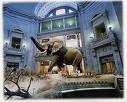
As a parent, I have informally tested my children from time to time about their memories. Once, I asked my oldest if he remembered visiting the Smithsonian's Natural History Museum a year after his last visit. He was about five years old at the time and he did not remember. I probed, and asked if he remembered what animal was just inside the main doors in the museum's rotunda. He still did not remember.
Here is what he did not remember, the giant elephant:
 When discussing memory in class, I often ask students to recall their oldest memories. Sometimes the answers are quite extreme. Some students claim to recall salient events before they turned two years of age, while others are at a loss to recall anything before age five.
With the above as introduction, I found Wang's recent article quite apropos. Its title is: Where Does Our Past Begin? A Sociocultural Perspective on the Phenomenon of Childhood Amnesia. Here is a link to it.
Wang summarizes the data on childhood amnesia. Looks at theoretical attempts to explain it and proposes that childhood amnesia may vary socioculturally.
As a parent, I have informally tested my children from time to time about their memories. Once, I asked my oldest if he remembered visiting the Smithsonian's Natural History Museum a year after his last visit. He was about five years old at the time and he did not remember. I probed, and asked if he remembered what animal was just inside the main doors in the museum's rotunda. He still did not remember.
Here is what he did not remember, the giant elephant:
 When discussing memory in class, I often ask students to recall their oldest memories. Sometimes the answers are quite extreme. Some students claim to recall salient events before they turned two years of age, while others are at a loss to recall anything before age five.
With the above as introduction, I found Wang's recent article quite apropos. Its title is: Where Does Our Past Begin? A Sociocultural Perspective on the Phenomenon of Childhood Amnesia. Here is a link to it.
Wang summarizes the data on childhood amnesia. Looks at theoretical attempts to explain it and proposes that childhood amnesia may vary socioculturally.
Thursday, March 6, 2008
The Arkansas Symposium for Psychology Students
The Arkansas Symposium for Psychology Students (ASPS) will hold its 24th annual meeting on April 18-19, 2008 at Arkansas State University and our own Chris Spatz will be the keynote speaker.
ASPS was founded in 1984 by Randy Smith and Ralph McKenna. The germ of their inspiration came while walking down Bourbon St. during the 1983 meeting of the Southwestern Psychological Association. The first meeting was held at Hendrix College in 1984 followed by a second meeting at Ouachita Baptist University the following year. See below for a list of the locations where ASPS has been held over the years.
That second meeting was where Chris and I first met. In fact, we roomed together. So, we have been working together for a long time now.
Here are the previous sites and keynote speakers of the Arkansas Symposium for Psychology Students:
McKenna and Smith envisioned a low-stress, collegial conference where students and faculty could come together and celebrate research in psychology. At ASPS, all papers are accepted and there are no competitions, all in the service of friendly gathering and a good time.
ASPS was founded in 1984 by Randy Smith and Ralph McKenna. The germ of their inspiration came while walking down Bourbon St. during the 1983 meeting of the Southwestern Psychological Association. The first meeting was held at Hendrix College in 1984 followed by a second meeting at Ouachita Baptist University the following year. See below for a list of the locations where ASPS has been held over the years.
That second meeting was where Chris and I first met. In fact, we roomed together. So, we have been working together for a long time now.
Here are the previous sites and keynote speakers of the Arkansas Symposium for Psychology Students:
1985 | Hendrix College | March 29-30 | |
| 1986 | Ouachita Baptist University | April 11-12 | Steve Davis |
| 1987 | Southern Arkansas University | April 3-4 | Arthur J. Riopelle |
| 1988 | Arkansas Tech University | April 8-9 | Richard Dana |
| 1989 | Arkansas State University | April 7-8 | E. John Capaldi, Michael Prince |
| 1990 | Henderson State University | April 6-7 | Nate Azrin |
| 1991 | University of Arkansas-Fayetteville | April 5-6 | Elizabeth Loftus |
| 1992 | Hendrix College | April 3-4 | Charles Brewer |
| 1993 | Ouachita Baptist University | April 2-3 | Mark Ware |
| 1994 | Southern Arkansas University | April 8-9 | Bill Hill |
| 1995 | University of Arkansas-Monticello | April 7-8 | Richard Miller |
| 1996 | Arkansas Tech University | April 12-13 | Craig Carson |
| 1997 | University of Central Arkansas | April 11-12 | Mark Ware |
| 1998 | University of Arkansas-Fayetteville | April 3-4 | Phillip Costanzo |
| 1999 | Harding University | April 16-17 | Dave Myers |
| 2000 | Arkansas State University | April 7-8 | Sarah Boysen |
| 2001 | Hendrix College | April 6-7 | Charles Brewer |
| 2002 | Ouachita Baptist University | April 12-13 | Ludy Benjamin |
| 2003 | Southern Arkansas University | April 4-5 | Elizabeth Yost Hammer |
| 2004 | University of Arkansas-Fayetteville | April 4-5 | Brett Pelham |
| 2005 | Arkansas Tech University | April 8-9 | Sharon Roberts |
| 2006 | University of Central Arkansas | April 7-8 | John Harsh |
| 2007 | University of Arkansas-Monticello | April 13-14 | no invited speaker |
| 2008 | Arkansas State University | April 19-19 | Chris Spatz |
McKenna and Smith envisioned a low-stress, collegial conference where students and faculty could come together and celebrate research in psychology. At ASPS, all papers are accepted and there are no competitions, all in the service of friendly gathering and a good time.
Sunday, February 3, 2008
Get the Lead Out
Here's another one of those old wives tales, except this time it turns out to be true. The tale is: Don't drink hot water from the tap. It turns out the old wives were right, this time.
A New York Times story, details why drinking hot water is dangerous. Hot water is more likely to contain lead, even in new homes. The hot water dissolves lead and other deleterious substances found in water pipes. The story points out that the risk is small, but why take chances.
More detailed information on lead and how to prevent lead poisoning can be found at the EPA's site on lead.
A New York Times story, details why drinking hot water is dangerous. Hot water is more likely to contain lead, even in new homes. The hot water dissolves lead and other deleterious substances found in water pipes. The story points out that the risk is small, but why take chances.
More detailed information on lead and how to prevent lead poisoning can be found at the EPA's site on lead.
Friday, February 1, 2008
Metaphors for Undergraduate Research
I put a lot of stock in teaching research as a process. Planning research is an important part of the process and students often wish to begin collecting data as quickly as possible. Of course, careful planning is critical to the success of any research project and many of our students have to be reined back as they champ at the bit to start.
I used a Sisyphean metaphor for research originally, but students did not like it because it made research look like an impossible task. After they made their objections clear to me, I changed the metaphor to a more pleasant one.
Here is the original, not-so-pleasant view of research:
 Like poor Sisyphus in Greek mythology, students saw their research efforts as an impossible task. The upslope represented the planning phases of research, while getting the ball to roll down the hill represented the collection and analysis of data followed by writing, presentation, and publishing.
So, I searched for a better metaphor. Something that indicated fun. Hmmmm.....
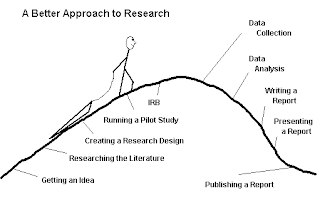
I kept the hill, but changed the task. Sledding is fun, but you have to get to the top of the hill first. On the figure on the right, I have labeled some of the specific tasks in research planning. The metaphor also reveals the timeline differences between planning research and conducting research.
Only after coming to grips with all of the aspects of research planning and testing them (in the Pilot Study), are researchers ready to collect data and undertake the remaining steps. Like sledding down the hill, these steps come at a faster clip than the steps in planning.
Students are pleasantly surprised once they begin to collect data. That process is usually faster than they expect. Carefully planned data analysis also can happen quickly. Sometimes it only takes a few minutes after the raw data are entered into a computer program. As deadlines loom, drafting and editing also speed by. The few minutes it takes to present a research report scarcely convey the long hours it took to get there.
For students who elect to publish their data, much more work awaits them. Maybe we can think of those efforts as climbing the next hill.
I used a Sisyphean metaphor for research originally, but students did not like it because it made research look like an impossible task. After they made their objections clear to me, I changed the metaphor to a more pleasant one.
Here is the original, not-so-pleasant view of research:
 Like poor Sisyphus in Greek mythology, students saw their research efforts as an impossible task. The upslope represented the planning phases of research, while getting the ball to roll down the hill represented the collection and analysis of data followed by writing, presentation, and publishing.
So, I searched for a better metaphor. Something that indicated fun. Hmmmm.....

I kept the hill, but changed the task. Sledding is fun, but you have to get to the top of the hill first. On the figure on the right, I have labeled some of the specific tasks in research planning. The metaphor also reveals the timeline differences between planning research and conducting research.
Only after coming to grips with all of the aspects of research planning and testing them (in the Pilot Study), are researchers ready to collect data and undertake the remaining steps. Like sledding down the hill, these steps come at a faster clip than the steps in planning.
Students are pleasantly surprised once they begin to collect data. That process is usually faster than they expect. Carefully planned data analysis also can happen quickly. Sometimes it only takes a few minutes after the raw data are entered into a computer program. As deadlines loom, drafting and editing also speed by. The few minutes it takes to present a research report scarcely convey the long hours it took to get there.
For students who elect to publish their data, much more work awaits them. Maybe we can think of those efforts as climbing the next hill.
Subscribe to:
Posts (Atom)